
The month is closed. Time to review the numbers.
Every month someone has to read through the close and check that the numbers add up for Kova, a made-up web shop. The machine has hidden a couple of errors in the numbers, the kind that eat the margin. You can look for them yourself first. Then you unleash an AI team that reviews right in front of you, with real model calls. You can check everything against the answer key afterward. The process is real even though the numbers are generated.
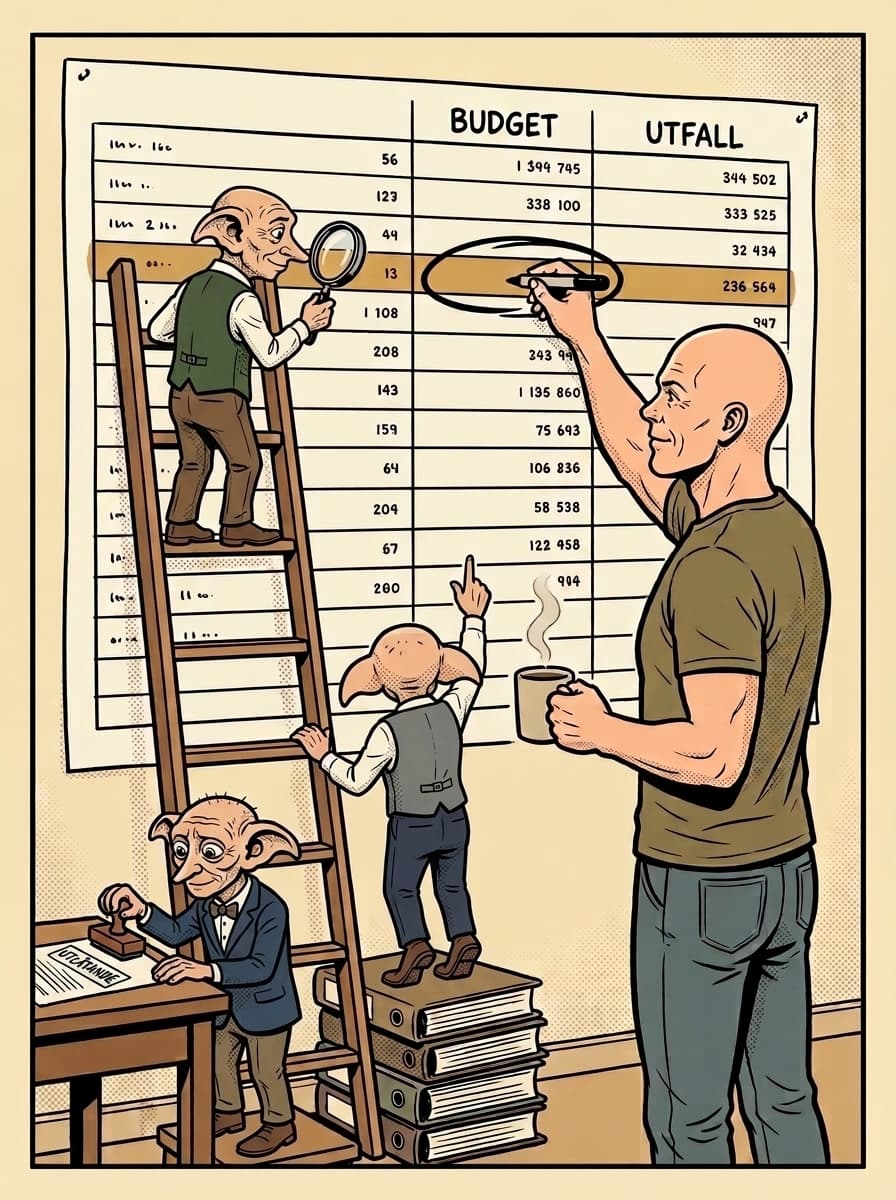
The month is closed, but there are variances in the numbers.
How it starts
A made-up monthly close for the Kova web shop, with two or three errors hidden in the numbers
Click the button and a unique month is built from a random seed, with budget vs actual, supplier invoices, and six months of history. A couple of errors are hidden in the numbers. It is all made up, nothing is saved.
What you just saw
The code calculated, the AI read and judged, the human decides
The actual math was done by plain program code. Click a variance and the formula behind it appears. The AI reads the numbers and judges them, it never does the math itself.
The AI team read, judged, and wrote in real time. Three specialists each with their own focus area, one at a time so you can follow along, and an editor who weighs the findings and asks a follow-up question.
The human decides. The report is material to check and act on, not a decision in itself. That is why you got the answer key and the option to download a CSV yourself.
Under the hood · the same principle as in the real build
A simplified version of a way of working you can run on real numbers
- The only input
A random seed
The client sends only a random seed. The server rebuilds the exact same month itself, so there is no free text to manipulate.
- Code, not AI
The math is calculated
Budget, actuals, variances, and the answer key are calculated deterministically. The math is exact and checkable, every formula can be clicked open.
- Haiku 4.5 × 3
Three specialists, one at a time
One data block each, real calls. They could run in parallel, but they take turns here so the review is possible to follow. The answer key is never sent along, the team reviews blind.
- Sonnet 4.6 · two phases
The Editor weighs in
Reads the findings and writes the report with actions at both the row and routine level.
↺ asks a follow-up question first - Your receipt
Report, answer key, and CSV
Honest grading even when the team misses, and a spreadsheet with live formulas so you can check the math yourself in Excel.
This is a demo, not a production system. The numbers, the shop, and the suppliers are made up, but the review you saw was done for real while you waited. The point is the way of working. The code calculates, the AI reads and suggests, the human decides. The whole demo was built in a day by a marketer who works the same way with real numbers, ad costs, margins, and broken tracking.
Read how it was builtThe whole build is documented, including the process review that tore up my first design.
Want someone on your team who knows how to do this?
Get in touch